Stormbox Blast Specs, Features, and Value: Is it worth the price tag?
The StormBox Blast series — a family of portable party speakers from Tribit — has attracted attention for promising party-level volume, built‑in light shows, ruggedness, and convenience features such as TWS pairing and power‑bank output. This article examines what the StormBox Blast (original) and the later StormBox Blast 2 offer in terms of specifications, real‑world performance, and everyday value. It aims to help readers decide whether the speaker fits their needs: backyard gatherings, small events, camping trips, karaoke nights, or simply a robust portable home speaker.
Quick overview: what the StormBox Blast is
- Manufacturer: Tribit (not JBL).
- Positioning: Portable “party” speaker with big sound signature, light effects, and rugged design.
- Two generations: the original StormBox Blast and the updated StormBox Blast 2, which increases output power, adds a dedicated subwoofer in hardware, upgrades ingress protection, and expands microphone/karaoke functionality.
- Typical uses: outdoor gatherings, tailgates, home parties, karaoke, DJ practice, and scenarios where portability plus loud, bass‑forward sound is desired.
Official specs at a glance
- Power output: Original: ~90W (AC). StormBox Blast 2: marketed around 180–200W combined output depending on power source and measurement method.
- Driver configuration: Original: multi‑driver array for mid/high; Blast 2: adds a dedicated subwoofer plus midrange and tweeters for a 2.1 style layout.
- Battery life: Up to ~30 hours (manufacturer rating — real battery life depends heavily on volume, EQ, and LED usage).
- IP rating: Original: IPX7 (waterproof for limited submersion). Blast 2: IP67 (dust‑proof and waterproof).
- Connectivity: Bluetooth (modern versions: Bluetooth 5.3 / 5.4 on newer units), SBC/AAC support, TWS pairing for stereo.
- Inputs/Outputs: AUX (3.5 mm), USB‑A power output (power bank), USB‑C charging on newer models, AC input for fast charging / higher output operation; Blast 2 adds 6.35 mm microphone inputs and karaoke effects.
- Dimensions & weight: Original is lighter and smaller (roughly mid single‑digit kilograms). Blast 2 is larger and heavier (example published weight ~7.1 kg / ~15.8 lb) — check exact model specs before purchase.
- Special features: Multi‑color music‑sync LED light show, Tribit app for EQ and light control (on compatible models), karaoke mode and dual mic support (Blast 2), and USB powerbank functionality.
Detailed product review and analysis
Design and build
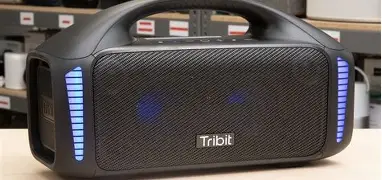
The StormBox Blast lineup uses a boxy, boombox‑inspired form factor with an integrated handle to emphasize portability. Materials are utilitarian: a mix of textured plastics, metal or composite grilles, rubberized feet, and large rubberized buttons. The Blast 2 tightens up the ruggedness with an IP67 rating, meaning it is safe from dust ingress and can be submerged briefly — a meaningful upgrade for beach and camping users.
Button layout and controls are straightforward: power, Bluetooth, volume and play/pause, plus dedicated buttons for lighting and EQ presets. The inclusion of a physical AC inlet on the larger model underlines the design intention: this is a party speaker that can run from mains for extended events, or from battery when mobility is needed.
Sound quality — what to expect
Tribit targets a party audience, and the sound signature reflects that. The speakers emphasize low‑end impact and high SPL capability. The Blast 2 introduces a dedicated subwoofer driver, which adds authority in the lowest octaves compared with the original. Listeners can expect strong, tactile bass at low to medium volumes and a forward midrange that helps vocals and electronic music cut through a noisy environment.
That said, there are trade‑offs. At very high volume levels the midrange can get forward and congested, and the smallest nuances and microdynamics typical of dedicated hi‑fi systems will be less pronounced. For jazz, classical, or studio‑critical listening, the StormBox series will not match a bookshelf system. For pop, hip‑hop, EDM, and crowd‑pleasing party playlists, it performs admirably.
Battery life and charging behaviour
Tribit rates battery life up to around 30 hours, but that number is achieved at moderate volumes with lighting disabled or set low. Using the light show, running at high volumes, or enabling heavy bass modes will reduce runtime substantially — often to only a fraction of the rated maximum. The Blast 2 supports AC mains operation, which is useful for full‑day events where battery is otherwise limiting.
Charging on newer units offers USB‑C and an AC option. Expect recharge times to vary: USB‑C charging will be slower than direct AC charging. A practical consequence is that buyers who want continuous high output should plan on using the AC inlet for multi‑hour events.
Connectivity and smart features
Bluetooth on the StormBox series is modern and reliable for consumer use. Bluetooth 5.x means stable range for typical backyard distances and faster reconnection times. Tribit’s app (where supported) provides basic EQ adjustment and light control, which is useful for tailoring the sound to vocal or bass‑heavy playlists. The TWS function supports pairing two units for wide stereo, which is a strong value for people who already own a second unit or plan to buy two.
Adding an AUX input and USB‑A power output increases utility: the AUX port lets older devices plug in without Bluetooth, and the USB‑A port can charge phones or light gear while the speaker runs — a practical plus for outdoors use.
Looking for the best Audio & Headphones deals on Amazon?
Browse Now →Lighting and party features
The RGB light show is a defining feature for buyers who want visual flair. LEDs are synchronized with music and adjustable through on‑device controls or the app. For many users, the lights are a decisive selling point — they transform the speaker into a focal point for parties. However, buyers who prioritize pure sound quality over spectacle might prefer models without integrated lighting, as LEDs draw battery and can distract from a clean listening experience.
Microphone and karaoke performance (Blast 2)
The Blast 2’s inclusion of dual 6.35 mm mic inputs and basic effects (reverb, level controls) makes it a reasonable karaoke or MC solution for casual events. Microphone sound is functional and well suited for announcements, sing‑along sessions, or small open‑mic situations. It is not a replacement for pro audio console gear, but it lets one combine music playback and live vocals simply and affordably.
Portability and real‑world use cases
Portability is relative: the original StormBox Blast is easier to carry for solo users; the Blast 2 is heavier but offers higher output. Real users typically choose the original for frequent transport (picnics, bike racks) and the Blast 2 for semi‑portable needs (tailgating with a car, backyard parties, or on‑site gatherings where the speaker moves infrequently).
Real‑world use cases where these speakers excel:
- Backyard barbecues and pool parties — loud, bassy music with lights and splash protection.
- Tailgates and tailgate‑adjacent gatherings — enough volume to cover a crowded, noisy area.
- Casual karaoke nights — Blast 2’s dual mic inputs and effects make setup fast.
- Camping with friends — ability to charge small devices and survive light splashes or dust.
- Apartment parties where neighbors tolerate louder volumes — the speaker’s upfront mids help vocals remain intelligible.
Pros & Cons
- Pros:
- Big, party‑oriented sound with strong low‑end impact (especially Blast 2).
- Robust feature set: LED light show, TWS pairing, USB powerbank, AUX input.
- Rugged build and improved IP67 rating on the Blast 2 for outdoor reliability.
- Practicality for backyard events: AC power option prevents battery constraints.
- Karaoke/mic support on the Blast 2 adds versatility for social events.
- Cons:
- Heavy and bulky compared with compact Bluetooth speakers — not ideal for ultralight users.
- Sound tuning favors punch and presence over analytical accuracy; not a hi‑fi replacement.
- Battery life drops significantly with lights and high volume; claimed runtime assumes conservative use.
- At maximum volumes the sound can become compressed or muddy in complex mixes.
- App and EQ functionality are useful but not as deep as some rival ecosystems.
How the StormBox Blast compares (table)
| Feature | StormBox Blast (Original) | StormBox Blast 2 | Typical portable party speaker (baseline) |
|---|---|---|---|
| Output power | ~90W (AC spec) | ~180–200W (combined, depending on mode) | 50–150W (varies by model) |
| Driver layout | Multi‑driver (mids & highs) | Dedicated sub + mids + tweeters (2.1‑style) | Varies: often 2.0 or passive radiator bass |
| Battery life (rated) | Up to ~30 hours | Up to ~30 hours | 6–24 hours (wide range) |
| IP rating | IPX7 | IP67 | Often IPX5–IPX7 |
| Connectivity | Bluetooth 5.x, AUX, USB‑A out | Bluetooth 5.x, TWS, AUX, USB‑C in, USB‑A out, mic inputs | Bluetooth, some with AUX/USB |
| Lighting | Music‑sync LEDs | Enhanced multi‑color LEDs, app control | Some have LEDs, many do not |
| Portability (weight) | Lighter (mid single‑digit kg) | Heavier (~7 kg) | Varies; some smaller, some heavier |
| Use case fit | Casual parties, portable use | Backyard parties, karaoke, semi‑portable events | From casual to semi‑pro depending on model |
Buying guide: who should consider a StormBox Blast?
1. Identify the primary use
If the main goal is high SPL outdoor parties with bass and lights, the StormBox Blast line is a strong contender. If the buyer is seeking a compact speaker strictly for commuting, indoor hi‑fi listening, or headphone‑level fidelity, there are better choices at smaller sizes and lower prices.
2. Portability vs. power tradeoff
Decide how often the speaker will be physically moved. The original StormBox Blast is more portable; the Blast 2 sacrifices some portability for louder, deeper bass and extra features. For frequent one‑person carries, opt for the smaller unit. For multi‑hour backyard events where mains power is available, the Blast 2’s AC capability is valuable.
3. Battery expectations
Treat manufacturer battery numbers as best‑case. If the buyer plans to run the lights and high volume all night, expect a significant reduction in runtime. For continuous, long events, plan for AC power or a secondary battery strategy.
4. Durability and environment
IP67 on the Blast 2 is a clear advantage for beach, dusty trails, and unpredictable weather. Buyers who intend to use the speaker around sand, dirt, or pools should prioritize the higher IP rating.
Looking for the best Audio & Headphones deals on Amazon?
See Deals →5. Inputs and mic support
Those who want karaoke or live mic use will appreciate the Blast 2’s 6.35 mm mic inputs and basic effects. For DJs or performers who need balanced XLR inputs and pro connections, this is still consumer gear and additional hardware will be required.
6. Sound preferences and EQ
Listen to sample tracks if possible. The StormBox Blast series favors bass and presence. If a flatter, more neutral sound is required, look for speakers aimed at reference listening and with deeper EQ/app control.
7. Budget and alternatives
Compare against other portable party speakers for price per watt, feature set, and warranty. The StormBox Blast delivers many convenience features (lights, powerbank, mic support) that increase overall value for party use. If budget is tight and the buyer prioritizes only sound, alternatives without lights may provide better raw audio value.
8. Warranty and after‑sales
Review the warranty terms and local service options. Portable outdoor speakers are exposed to knocks, spills, and abusive use — reliable customer support and a reasonable warranty period improve long‑term ownership value.
Conclusion
The Tribit StormBox Blast series targets a clear niche: buyers who want a portable, rugged speaker that delivers party‑level loudness, impactful bass, and visual flair. The second‑generation StormBox Blast 2 strengthens the offering with a dedicated subwoofer, higher output, IP67 protection, AC operation, and karaoke inputs — improvements that make it a better fit for people who host frequent outdoor gatherings or want semi‑portable, mains‑capable performance.
Value depends on use case. For casual indoor listeners or those who want a compact, neutral speaker, the StormBox Blast will feel oversized and tuned in a way that prioritizes spectacle over subtlety. For social users who care about loud, crowd‑pleasing sound, integrated lights, and practical extras such as a powerbank and mic support, the StormBox Blast (especially the Blast 2) offers a compelling and cost‑effective package compared with similarly featured party speakers.
In short: the StormBox Blast is worth the price if the buyer values loudness, bass impact, ruggedness, and party features more than compact size and audiophile neutrality. Buyers who prioritize studio fidelity, extreme portability, or pro‑level inputs should consider other products better suited to those priorities.